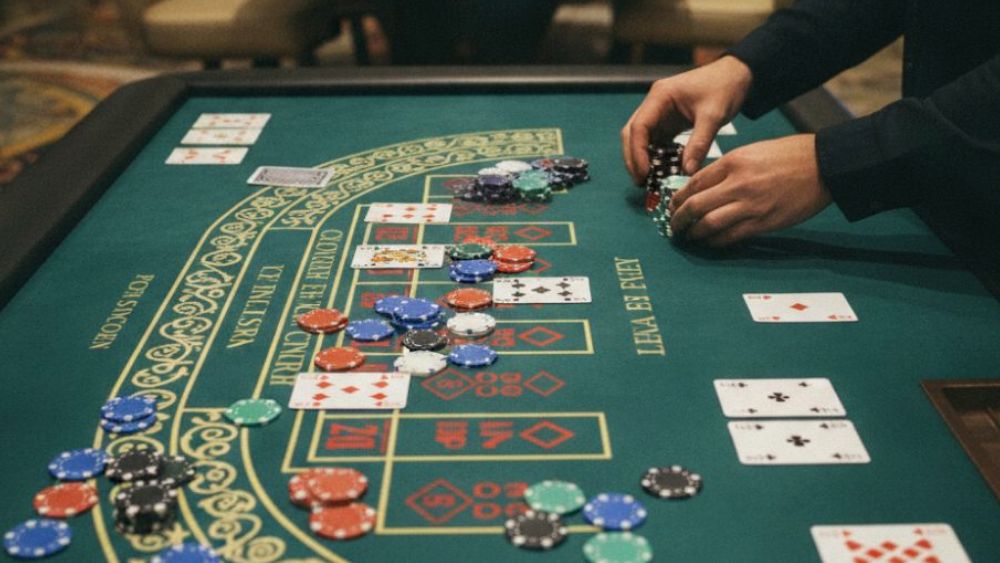
Myth 1: Tongits Is Just a Game of Luck
If you've ever played tongits, you know luck plays a role. But calling it purely a game of chance is like saying poker is just about the cards you're dealt. Fact: Tongits rewards skill, memory, and strategic decision-making far more than casual players realize.
Consider the discard pile. Every card your opponent throws away is a clue. A seasoned player tracks patterns: Who's holding onto deadwood? Who's fishing for a set? Who's one card away from a buwenas? This isn't luck—it's observation.
In 2026, online tongits platforms have made it easier to analyze your own play. Replays and hand histories show that consistent winners make calculated calls, not random ones. They know when to fold a promising hand and when to push for the jackpot. So next time you blame bad luck, ask yourself: did you really play that hand optimally?
“Tongits is 30% luck, 70% skill. The sooner you accept that, the faster you'll improve.” – Anonymous Filipino tongits veteran
Myth 2: The Goal Is Always to Get Rid of All Your Cards
Many beginners think the sole objective is to empty your hand. That's true in many shedding games, but tongits has a twist: you can also win by calling a draw or by having the lowest deadwood when the pile runs out. Fact: Sometimes, holding onto a few high-value cards can be a winning strategy if you can force a draw or if your opponents are stuck with even worse deadwood.
When to Hold Back
Imagine you have a pair of aces and a king. You could meld them quickly, but that leaves you with a weak hand. Instead, you might hold the aces as a safety net, discarding low cards and waiting for a better opportunity to sapaw (add to an existing meld) or to call a draw when your deadwood is low. This nuance is what separates novices from sharks.
Online tongits in 2026 often includes a 'deadwood counter' that shows your current total, helping you decide whether to push for a win or play defensive. Use it wisely—it's not just about emptying your hand; it's about ending the round with the least points.
Myth 3: You Should Always Challenge a Jackpot Call
The jackpot in tongits is a tempting prize. When a player calls it, others can challenge if they suspect the caller still has a card that can be added to an existing meld. But is it always worth challenging? Fact: Challenging comes with risk. If you're wrong, you pay a penalty, often double the jackpot amount. If you're right, you split the jackpot or get a reward depending on house rules.
In 2026, many online tongits rooms have adjusted jackpot rules to encourage more aggressive play. Some now allow a 'safe challenge' where you only lose half the penalty if you're incorrect. Still, the core principle remains: only challenge when you have strong evidence. For example, if you've been tracking discards and notice the caller never picked up a particular suit, they might be hiding a card that fits a meld on the table.
Don't let ego drive your challenge. A good player calculates the odds. If the potential gain outweighs the risk, go for it. Otherwise, fold and wait for a better spot.
Myth 4: Online Tongits Is Rigged Against You
It's a common refrain: “I keep losing online, the game must be rigged.” While it's true that some shady operators exist, reputable platforms use certified random number generators (RNGs) and are audited by third parties. Fact: In 2026, the Philippine Amusement and Gaming Corporation (PAGCOR) has tightened regulations on online card games, requiring fair play certifications. Legit sites display their RNG certificates and publish payout percentages.
That said, not all platforms are created equal. Before depositing, check for:
- PAGCOR license and seal
- Independent audits (e.g., eCOGRA, iTech Labs)
- Player reviews on forums and review sites
- Transparent shuffling and dealing procedures
If a site feels fishy, it probably is. Stick to established brands. And remember: variance happens. Even the best players go on losing streaks. Keeping a record of your hands can help you distinguish between bad luck and a rigged game.
Myth 5: You Can't Use Advanced Strategies in Tongits
Some believe tongits is too simple for deep strategy—that it's all about melding as fast as possible. Fact: Advanced players employ a range of tactics, from card counting to psychological warfare. Here are a few you can start using today:
- Discard reading: Pay attention to what your opponents discard. If someone throws away a 5, they likely don't need another 5, so you can safely discard yours.
- Meld manipulation: Sometimes, it's better to hold off on melding a set to keep your options open. You might later sapaw a card that completes a bigger combo.
- Bluffing: In live games, a well-timed hesitation or confident call can mislead opponents. Online, you can use chat and timing to your advantage (but don't be a jerk).
- Endgame calculation: When the deck is low, calculate the probability of drawing the card you need versus the risk of increasing your deadwood.
These strategies require practice, but they're what make tongits a rich, competitive game. In 2026, online tools like hand analyzers can help you review your decisions and spot leaks in your game.
Myth 6: Tongits Is Only for Casual Play
Many Filipinos grew up playing tongits at family gatherings, so it's often seen as a casual pastime. But in 2026, tongits has evolved into a competitive esport with tournaments and cash prizes. Fact: Major online platforms host daily tongits tournaments with buy-ins ranging from a few pesos to thousands. Skilled players can earn a side income or even go pro.
The rise of competitive tongits means the meta is constantly shifting. Strategies that worked in 2020 might be outdated now. For example, the 'always challenge jackpot' mentality has been replaced by a more calculated approach. To stay ahead, follow tongits communities, watch streamers, and analyze your own gameplay.
Whether you play for fun or profit, treating tongits as a serious game will improve your results. So next time someone says it's just a casual game, smile and take their chips.